Henry David Thoreau
Henry David Thoreau was born July 17, 1817 in Concord, Massachusetts. He attended Harvard at the age of 16. After graduation, he became a good friend of Ralph Waldo Emerson, who introduced him into the transcendentalist society and the inner circle of transcendentalists. Emerson encouraged Thoreau to write and publish essays and poetry in the transcendentalist magazine. Most of his works for the magazine were collections of observations from his journal, which he began in 1837 at Emerson’s request. In 1845, he began living simply at the edge of Walden Pond for 2 years as an experiment in simple living, one of his values. He returned in 1847, and later wrote one of his most famous works, Walden, in 1854, which was not admired at the time of release, but became a critically acclaimed American classic later. Thoreau was very interested in science and nature, and made extensive observations about nature. He was one of the earliest American environmentalists, as he wrote many essays about nature and was one of the first American supporters of Darwin and his theory of evolution. He also worked at his family’s pencil factory throughout his life, and was a natural mechanic. He discovered a way to make a pencil with inferior graphite by adding clay to the binding solution, which greatly helped his family with the business. Thoreau died in 1862 of tuberculosis.
Thoreau was a transcendentalist who believed strongly in the importance of simple living and civil disobedience. Thoreau also beloved strongly in the importance of nature and the study of nature. His 2 most famous works, Walden and Essays on Civil Disobedience, deal with his 2 ideas respectively. Walden was based on his experiences at Walden pond (see above) and Essays on Civil Disobedience touted the importance of, well, civil disobedience.
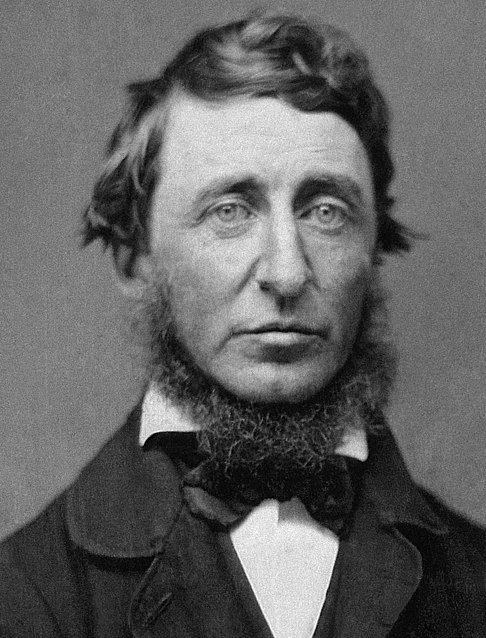
"Henry David Thoreau." Biblio.com. 2000-2008. Accessed 6/2/2008 http://www.biblio.com/authors/600/Henry_David_Thoreau_Biography.html
Sorry about the lack of brackets <>, but they hide the URL in HTML.